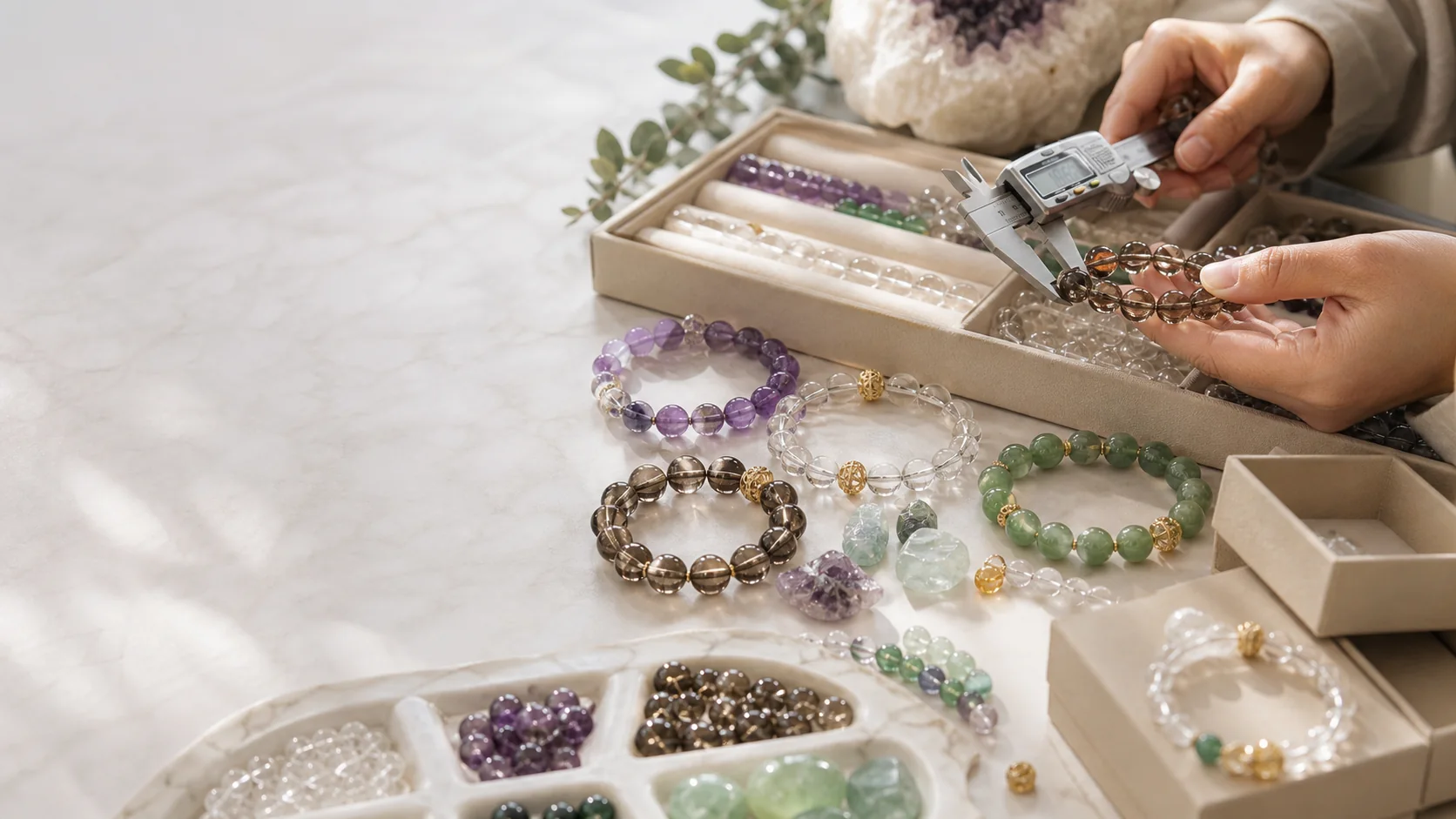
How should buyers evaluate wholesale crystal accessories suppliers?
Use the same itemized request for every candidate, then mark each response field confirmed, conditional, unanswered or unsupported. Compare business identity and role, exact product references, material and treatment information, the relationship between photos or samples and the proposed batch, packaging and media scope, proof requirements, and current written commercial and delivery terms. A search ranking, directory profile, polished listing or this page does not verify that a supplier is reliable.
Key takeaways
What buyers should take from this guide
1. Identify the business and its role
Start by recording the business identity, contact route and stated role. An independent supplier site, marketplace seller, directory profile and sourcing intermediary expose different evidence and may involve different quoting, invoicing or fulfillment parties.
A company profile or search position is discovery evidence, not qualification. Ask who will issue the quote and invoice, who supplies the goods and whether another company manufactures or fulfills them.
2. Send every candidate the same request
Build one item table with the SKU, URL, photo reference or material direction, quantity by item, specification, destination and intended use. Send that same table to each candidate instead of comparing unrelated catalogs or generic sales replies.
Separate finished bracelets, broader accessories, beads, strands, components and raw stones. Product form changes which dimensions, tolerances, packing and proof questions need an answer.
3. Verify exact-item and material evidence
Ask for the trade name, material family, bead or component dimensions, finish, color expectation, acceptable variation and treatment information when relevant. Tie every response to the exact requested item.
Do not transfer a material statement, test result or certificate from one SKU to another. If a claim cannot be matched to the requested product, mark the field unsupported or unanswered.
4. Define what photos and samples represent
Ask whether listing photos show the exact item, a representative item, a previous batch or only a style reference. If a product-specific sample can be reviewed, record which product and batch relationship it represents.
A reviewed photo or sample does not establish future availability, consistency or acceptance. Reconfirm the proposed batch and current terms before relying on it for a later request.
5. Keep packaging, media and proof as separate fields
List boxes, pouches, cards, labels, artwork and placement requirements separately. Do the same for exact-SKU photos, video, packaging shots, file specifications and written usage rights.
Name the exact material, treatment, testing, certificate, labeling or destination requirement before expecting a quote. The existence, scope, issuer, product match, cost and timing of any document require confirmation.
6. Record current commercial and delivery terms
Use a response ledger for price, MOQ, availability, lead time, packing, shipping, payment, acceptance and future-order conditions. Copy the written answer and its date rather than converting silence or a broad statement into a confirmed term.
Mark conditions explicitly. A reply such as 'subject to material review' is conditional, not confirmed, and an old quote does not establish current terms.
7. Score evidence, not promises
For each field, use four states: confirmed, conditional, unanswered or unsupported. This produces an auditable comparison without inventing numeric weights or treating fast replies and polished listings as product evidence.
A preliminary scorecard helps identify missing information; it does not verify reliability. If a transaction occurs, compare the received goods, packing and documents with the confirmed request and keep that result separate from any future order.
8. Copy-ready evaluation request
Use this structure: 'Business and destination: [details]. Items and quantity by item: [table]. Material and specification fields: [details]. Packaging and labels: [details]. Exact-SKU media and usage rights: [details]. Proof or document needs: [details]. Please confirm price, MOQ, availability, lead time, packing, shipping and acceptance for this exact request.'
Submitting the request does not guarantee that any product, sample, packaging, media, document or commercial term is available.
Procurement checklist
Source notes
FTC Jewelry Guides
Use the guides as a US reference for truthful jewelry-industry representation. They do not verify a supplier or product and are not destination-specific legal advice.
View sourceBuyer FAQ
What is the most important supplier evaluation factor?
There is no universal single factor. Start by confirming the business identity and exact product, then compare material evidence, batch relationship, proof scope and current written terms against the same request.
Should small retailers ask for the lowest MOQ?
They can ask for MOQ, but should not assume a generic or combined value. Send quantity by item and record the supplier's current written conditions for the exact product, packaging and destination.
Can supplier photos be used directly for listings?
Do not assume so. Confirm whether the asset shows the exact item, what edits or reuse are permitted, and whether separate terms apply. Buyers remain responsible for their listing and destination requirements.
Does this checklist verify that a supplier is reliable?
No. It structures an evidence comparison. A ranking, listing, directory profile, sample, previous order or this page does not guarantee current product quality, availability, terms or future performance.
Turn the guide into a reviewable inquiry.
Send product or material references, rough quantity, destination and any packaging, media or proof requirements for manual review.
Prepare wholesale inquiryBrowse catalogContinue by sourcing path
Finished bracelet SKU references and the fields buyers should send for request-specific commercial review.
OpenWholesale crystal accessoriesBracelet-led accessories, beads, strands, charms, spacers and packaging or media requests that require manual review.
OpenWholesale crystal stone raw materialsManual quote review for raw crystal stones, bead materials, strands, components, proof needs and Ketang supply-chain context.
OpenRaw stones, beads and components checklistRaw stones, drilled beads, strands, findings, components and finished bracelet development questions.
OpenKetang sourcingKetang source-region context for overseas buyers comparing crystal supply and quote paths.
OpenWhy source crystal bracelets from Ketang?Use cited regional evidence to separate Ketang source-region context from supplier-specific proof and commercial terms.
OpenAbout Ketang Impression Crystal SupplyVerify the B2B sourcing identity used by ktcrystals.com and keep that business identity separate from the wider Ketang source region.
Open